
Business Process Automation
We connect CRM, email, shop, spreadsheets, and APIs so data flows without manual re-entry, giving your team back time for decision-making work.
fromPLN 2,000
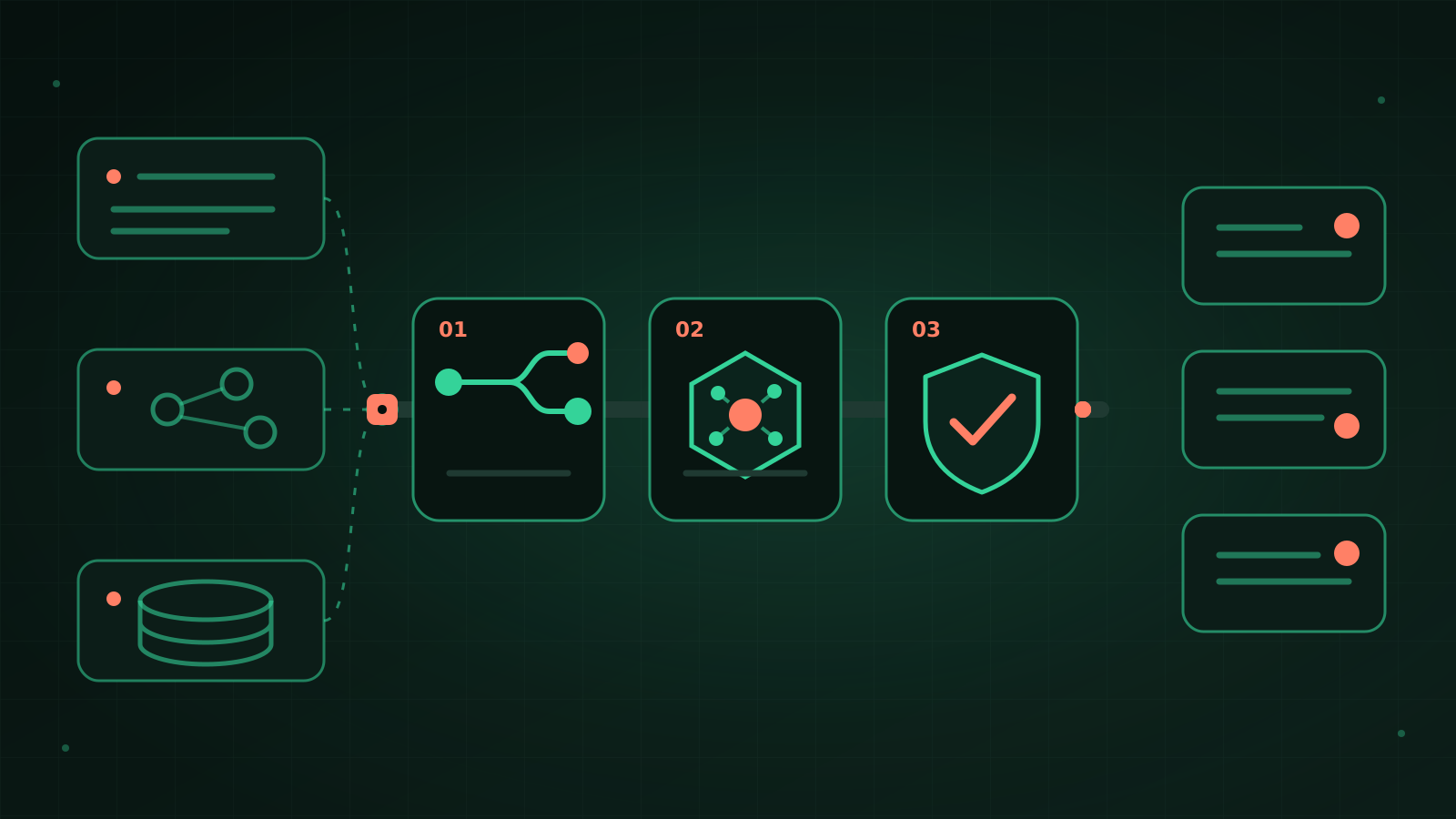
Business process automation connects systems and rules so repetitive work executes without manual data copying. The best first scope has a clear start, outcome, and owner: for example, a submission flows from a form into CRM, gets categorized, and the right person receives a task.
When you need this
- Someone on the team manually copies data from one system to another.
- Submissions, orders, or documents wait for a person to move them to the next step.
- The same report or message is generated on a recurring schedule by fixed rules.
- Errors stem from missed steps, wrong file versions, or manual copying.
- You want to start with a small, measurable improvement instead of a full company overhaul.
What to automate first?
A good candidate meets four conditions: it happens often, follows a repeatable pattern, uses available data, and can be verified at the end. A rare, chaotic, or exception-heavy process needs organizing first.
Typical first deployments include:
- routing a lead from a form into CRM with owner assignment;
- syncing orders, inventory, or documents between shop and back office;
- generating a recurring report and delivering it to the right people;
- a document approval workflow with status history and reminders;
- a message sequence triggered by a specific event, not a manual calendar.
Automation or AI agent?
Fixed rules call for automation. Interpreting unstructured data may justify an AI agent. If every step can be described as "if A, do B", a simpler mechanism is more predictable. We add a language model only when you need to understand document content, classify an unusual message, or choose an action from context.
What you get
- current and target state description with a clearly defined process boundary;
- integration with agreed systems, APIs, or data sources;
- handling of typical errors, logging, and notifications;
- tests on representative cases and documentation for the team;
- measurement of agreed indicators before and after, if baseline data is available.
A single, narrow automation costs roughly 2,000–8,000 PLN. A package covering several linked flows or a document workflow typically falls in the 8,000–25,000 PLN range. With many processes, we map dependencies first, then price the scope.
What deployment looks like?
- Pick the process. Define its frequency, owner, and baseline.
- Map the flow. Name the systems, data, exceptions, and human decision points.
- Build and test. First on a safe scope with real examples, then in the target environment.
- Enable monitoring. The team knows where to check results and what to do if an integration fails.
- Measure and decide. Only the first process outcome justifies a package of further changes.
Self-running collectors are demonstrated via our own analytics platform. That's proof of production mechanics, clearly described as our product, not a client deployment.
When automation doesn't pay off?
When the task occurs sporadically, the system lacks a stable API, the process changes weekly, or maintenance cost exceeds savings. In those cases a simple organizational change often works better.
If you want a closed package with process map, launch, and measurement, choose first process automated end-to-end. If you're unsure which process to pick, an AI audit ranks opportunities by potential and risk. A process needing interpretation becomes an AI agent. You can also describe the repetitive steps and systems used directly in the brief.
FAQ
Where's the best place to start?
With one concrete process that runs frequently and predictably. That scope lets you measure changes in time, error count, or response time before deciding on further automations.
Will automation replace people?
The goal is to reduce manual, repetitive steps and errors. How the company uses the reclaimed time and structures employment remains its decision — we don't promise headcount impact.
What tools do you integrate with?
Whatever you already use — CRM, email, spreadsheets, shop, databases, and APIs. We fit the solution to your existing toolset, not the other way around.
What happens when one system stops responding?
We design error handling, retries, and alerts for critical steps. Monitoring scope depends on the process — a report is secured differently than invoice issuance or order status changes.
How do we verify the automation pays off?
Before deployment we capture the baseline: frequency, manual step count, time, and error cost where credibly measurable. After launch we compare the same set of indicators.