
Multi-agent systems for companies
We design systems of multiple AI agents with separate roles, handoffs, and verification stages for complex, measurable processes.
fromPLN 15,000
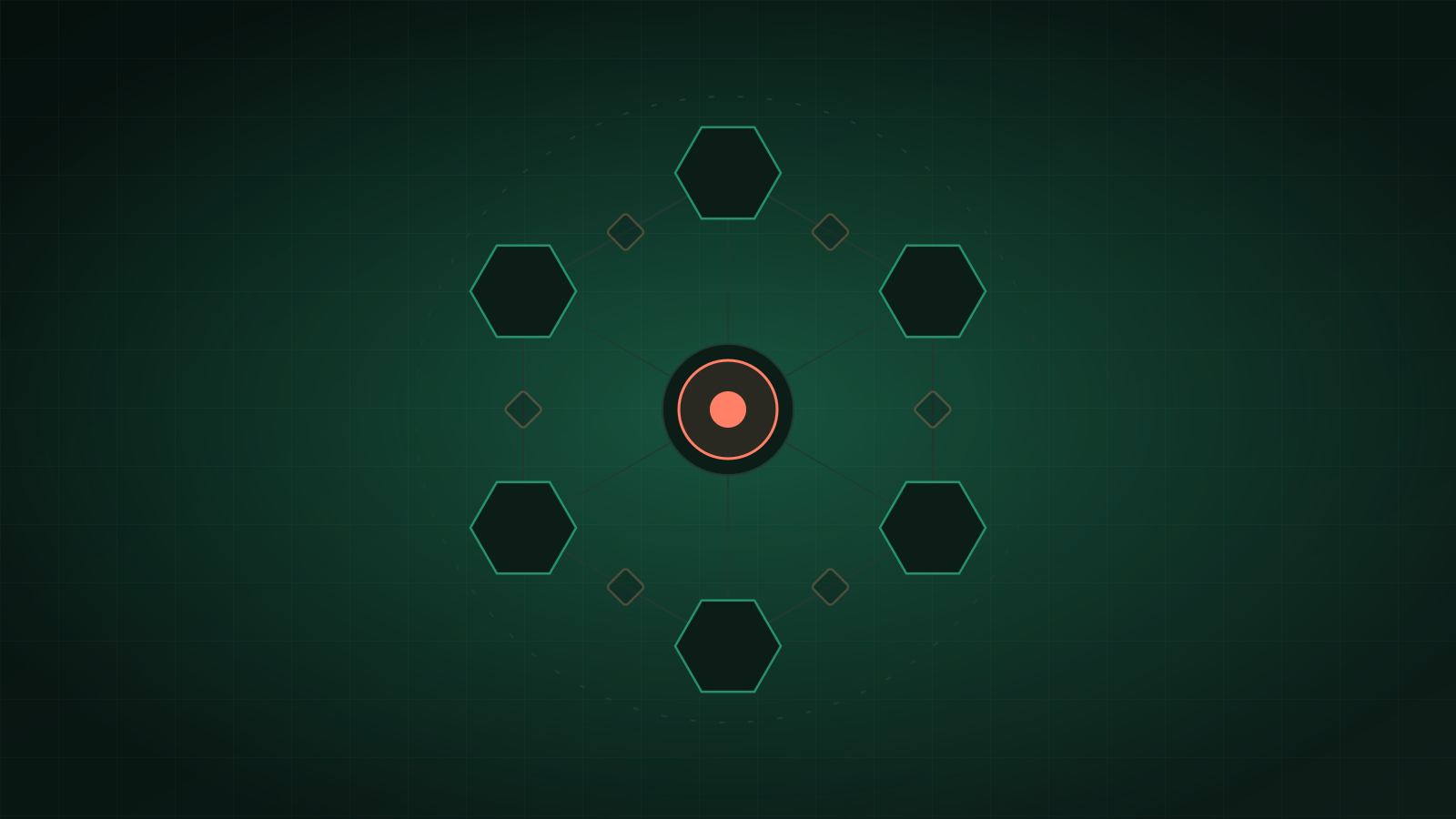
A multi-agent system is a workflow in which specialised agents receive defined roles, tools, boundaries, handoffs, and verification duties. It is not a collection of chat windows. We use it where a complex process benefits from splitting research, interpretation, action, and review.
When it makes sense
- A single agent loses consistency on a long or multi-step task.
- The process needs distinct roles, such as researcher, operator, verifier, and approver.
- The result must be traceable: who used which sources, made which decision, and where a human stepped in.
- A measurable pilot can compare a multi-agent approach with simpler automation or one agent.
What we design
We map the process, set role boundaries, choose tools and data each role may access, define handoff formats, and establish the test set and evaluation criteria. We also specify approval points, logs, failure handling, monitoring, and a path for a human takeover.
The system is deliberately no more complex than the task demands. Fixed rules usually call for process automation; an unstructured task with one action path may need a single AI agent. Several roles are added only when they improve quality or accountability.
What you receive
- a process map and role contract;
- integrated agents with controlled permissions and tools;
- test cases, evaluation results, and acceptance thresholds;
- logs, monitoring, and human-approval paths;
- deployment and documentation for maintenance.
An implementation starts from approximately 15,000 PLN. The final scope depends on roles, coordination, integrations, data, and supervision requirements. We normally start with a pilot instead of granting broad autonomy on day one.
Evidence and next step
Our AI research workflows show the mechanism we use in our own work: separate roles, independent drafts, a judge, and adversarial review. Describe a process in the brief and we will determine whether multi-agent design is justified.
FAQ
How do multi-agents differ from a single agent?
Instead of one assistant, we build a team of agents with roles that divide work, pass it between stages, and verify outputs. This makes sense only when tests show a better outcome or accountability than one agent.
How do we know it will work for us?
We begin with a pilot of one process: a small, measurable scope that shows value before a full implementation.
Who has already built this?
We use multi-agent processes in our own research and editorial work and show their mechanics in the laboratory. We label that as our R&D, not as a client deployment.
Do more agents always produce a better result?
No. Every handoff adds cost, delay, and a possible error point. Multiple roles make sense only when divided responsibility and separate verification improve a measurable outcome.
Where does the human remain in such a system?
At high-risk points: approving a decision, handling an exception, and reviewing evaluation results. Autonomy grows only after quality has been documented on real cases.