
Second brain for companies - RAG and knowledge
A second brain organises company knowledge and makes it available through search or an AI assistant that answers from identified sources.
fromPLN 30,000
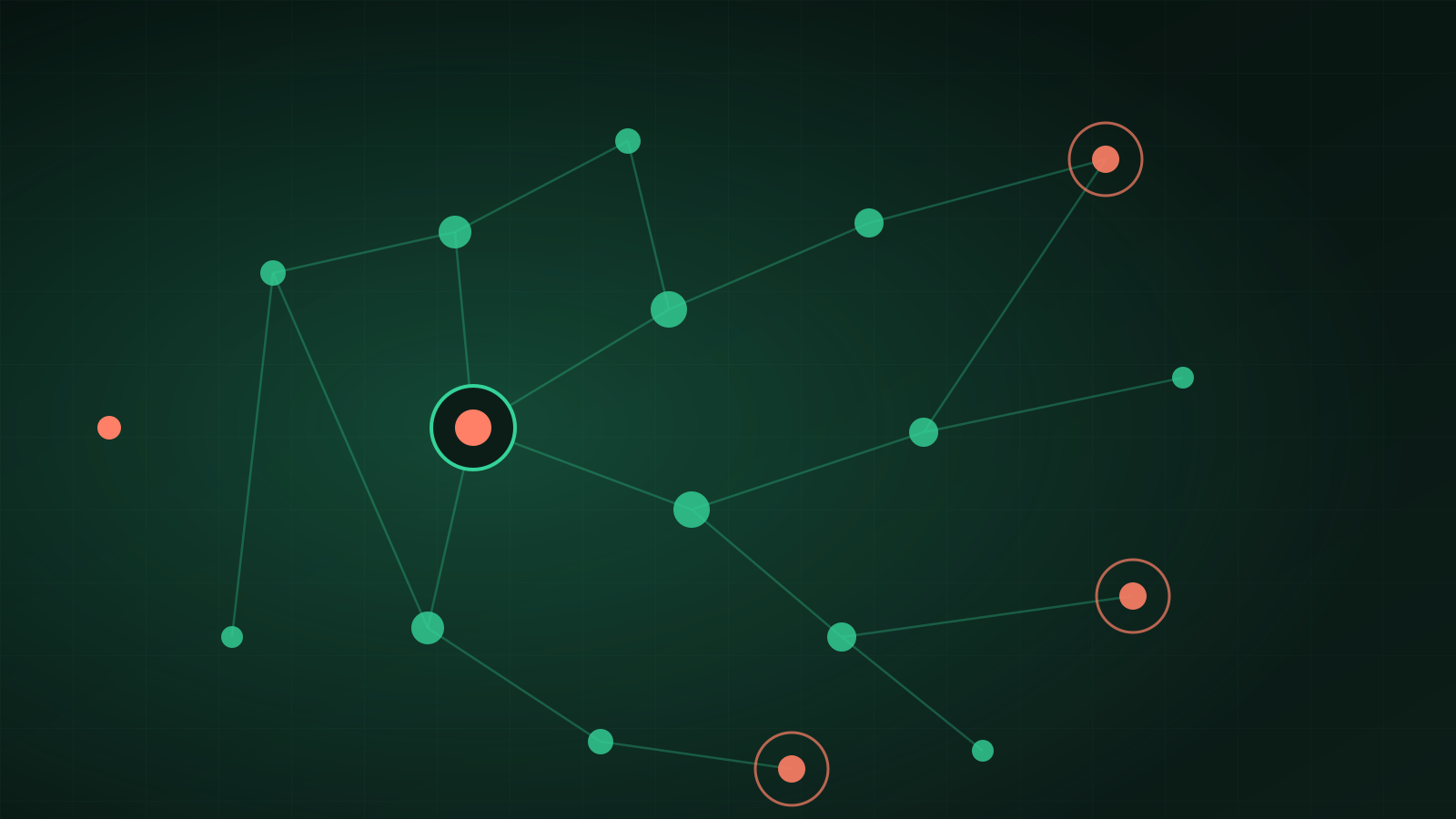
A second brain is a company knowledge system that lets a person or assistant find an answer in approved sources and show where it came from. It is not a promise that a model will “know everything”; it is a controlled path from a question to evidence.
When it is useful
- Important procedures and decisions are dispersed across documents, drives, tickets, and people.
- The same questions repeatedly reach experts who should spend their time on exceptions.
- You need a search or assistant that respects roles and access boundaries.
- Traceability matters: an answer needs to point to a document rather than sound confident.
What we build
We inventory sources, establish ownership and access rules, clean or label metadata where needed, build ingestion and retrieval, and design an interface or integration for users. Where relationships are material, we add a knowledge graph; otherwise a focused RAG architecture is often simpler and more reliable.
Quality is evaluated on real questions with expected outcomes. We measure retrieval and answer quality, make sources visible, and define what happens when there is no adequate evidence: a refusal, clarification, or a handoff to a person.
What you receive
- a mapped and governed source base;
- search or an assistant grounded in approved sources;
- access controls, logs, and source citations;
- a test set, quality results, and maintenance guidance;
- architecture and integrations appropriate to your environment.
An implementation starts from 30,000 PLN. The scope depends on source volume and condition, required accuracy, integrations, permissions, and scale. Start with a RAG pilot when the quality of the source material is still unknown.
Our knowledge-graph tools show the approach we use in our own R&D, including the distinction between what was found and what was inferred.
FAQ
What is behind this technically?
RAG—retrieval-augmented generation—and, where useful, knowledge graphs. We index knowledge, retrieve it semantically, and ground answers in sources. “Second brain” describes the business outcome, not a separate technology.
Are the answers reliable?
We design the system to ground and cite answers in retrieved sources, but do not assume infallibility. Quality is measured on an agreed question set, and when evidence is missing the system should refuse or hand the case to a person.
Where should we start?
With a pilot on a knowledge sample. It measures answer quality on company data before a full implementation decision.
Is a knowledge graph always needed?
No. Many collections need only well-built RAG and organised metadata. We add a graph when relationships between people, documents, products, or events matter to the answer.
How do you control access to confidential knowledge?
We map roles and permissions, separate indexes or filter sources, and record the documents used. The detailed model depends on data sensitivity, existing systems, and organisational requirements.