
Automating enquiry handling
How to break enquiry handling into automatable stages, where to keep a human boundary, and what to measure to know whether it helped.
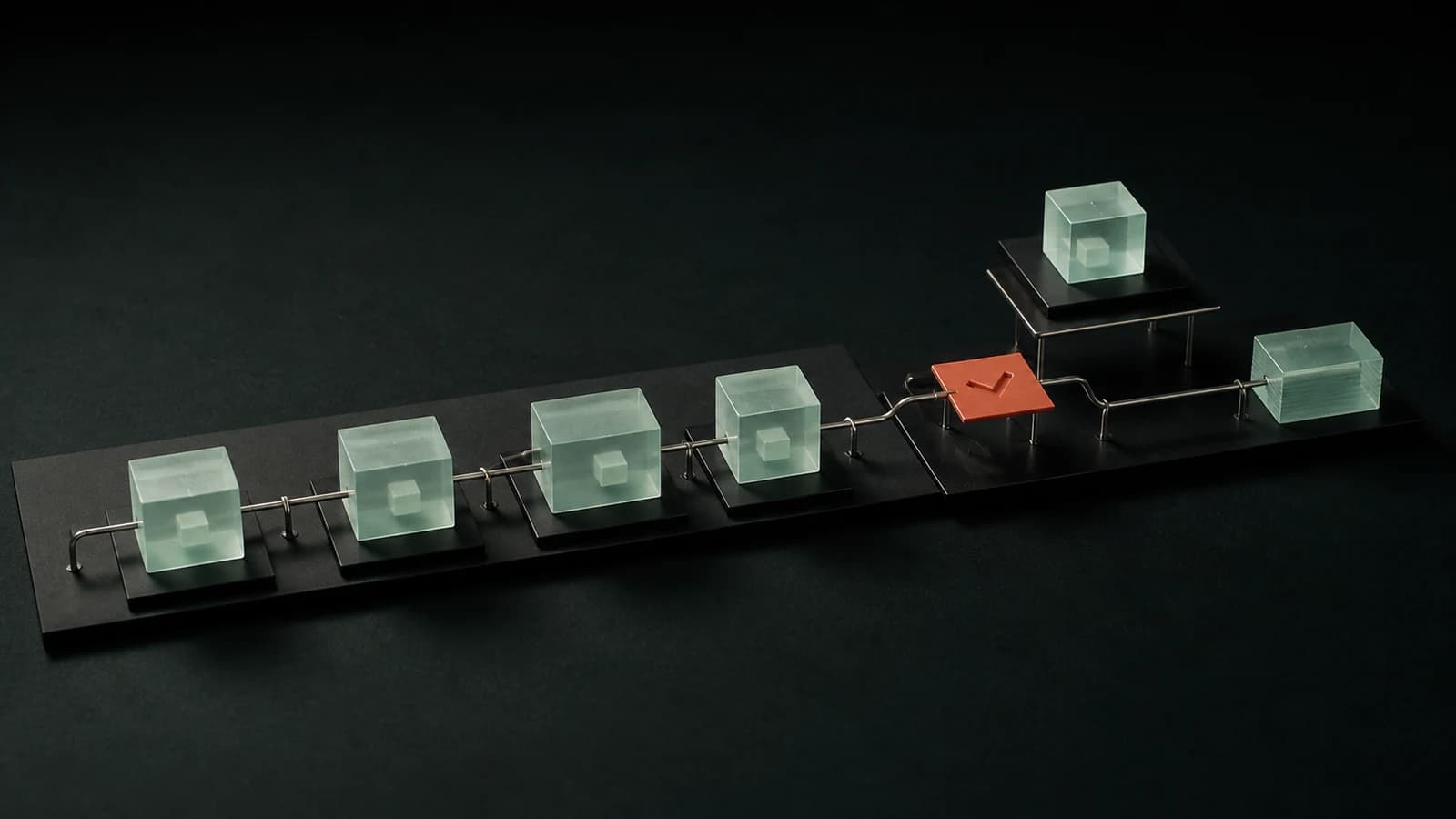
Break enquiry handling into stages and automate only decisions that are repeatable, measurable, and safe. Receiving a case, enriching its data, or preparing a draft can be good candidates; the safe level of classification and sending depends on data quality and the cost of an error.
Six stages of enquiry handling
| Stage | What happens | Typical owner |
|---|---|---|
| 1. Intake | a case arrives from email, form, chat, or phone | automation |
| 2. Classification | type, urgency, and right team are identified | automation with AI layer |
| 3. Enrichment | customer, history, or order data is added | automation |
| 4. Draft response | a draft is prepared from a knowledge base | AI layer |
| 5. Resolution | a non-standard decision is made | human |
| 6. Closure and measurement | the case closes and becomes learning data | automation |
Start with classification and data, not a robot reply
Classification is a good first step when it is frequent, has a clear correctness criterion, mistakes are reversible, and historical cases form a representative test set. A low-confidence result, missing data, or a high-risk category should route to a person.
For response drafting, the company knowledge must be controlled and current. Otherwise the system can produce a polite but false answer. Start with a suggestion that a person approves; move to automated sending only in narrow, tested categories with a complete log.
Keep a human boundary
Escalate cases involving legal or costly consequences, empathy or de-escalation, low confidence, absent source evidence, or an explicit request for a person. The customer should have a simple route to human contact. Any AI interaction disclosure required by the applicable rules should be assessed for the actual interface and use case.
Measure quality as well as speed
Compare time to first response, time to resolution, share of cases handled without a person, classification accuracy, and the rate of cases that return. A faster response is not an improvement if it creates more repeat work.
Indicative August 2026 ranges: 2,000–8,000 PLN net for a focused intake/classification/enrichment automation; 8,000–25,000 PLN net for a fuller AI-assisted flow; and 8,000–30,000 PLN net for an end-to-end case agent. Start with the First Automated Process.

Author
Maciej Szukalski
Founder of Condictor · systems architect · research and development
He has designed and built digital products since 2014. He specialises in architecture, research, and applications with automation and intelligence layers.
See experience and working principlesHave a problem to solve?
Let’s find the right first step
Describe your situation in a few sentences. We’ll return with questions or a concrete proposal for what comes next.